The difference in one sentence
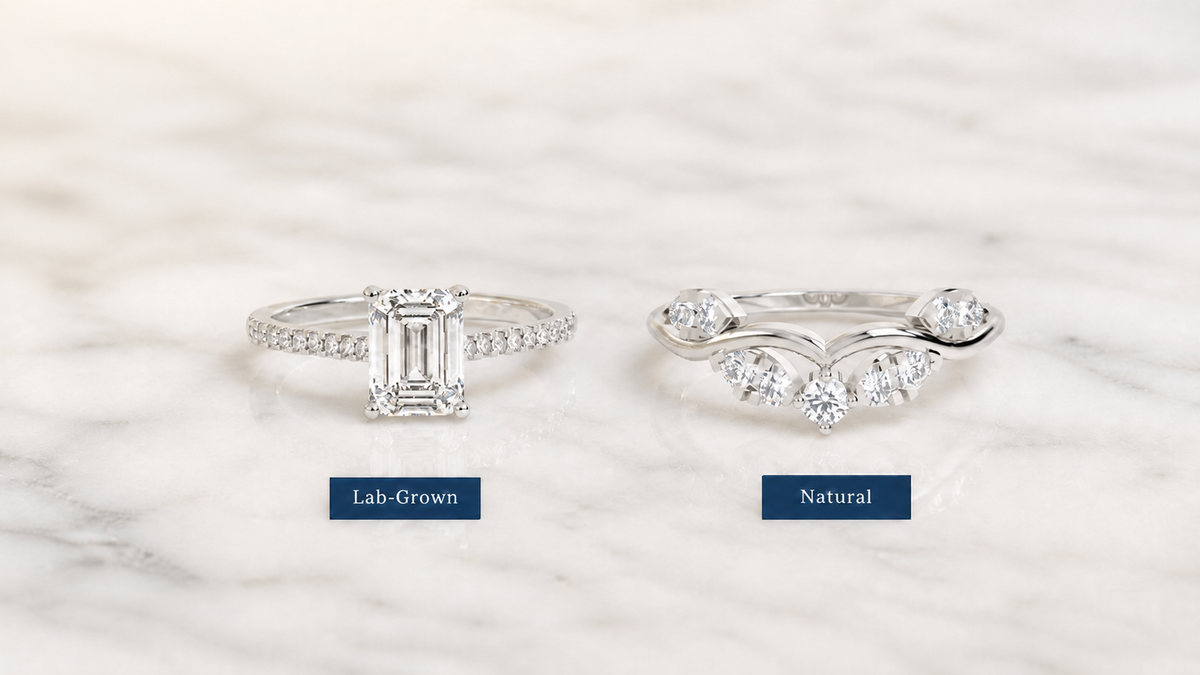
A natural diamond formed inside the earth over a very long time; a lab-grown diamond formed in a controlled environment over a few weeks — and everything else about them is essentially identical.
That's it. Everything below is just detail on that one sentence.
What is genuinely identical
This is the part that surprises people, so let's be precise about it. A lab-grown diamond and a natural diamond share:
- Composition — both are pure carbon in the same crystal structure.
- Hardness — both rate 10 on the Mohs scale, the hardest of any material. Neither scratches more easily than the other.
- Sparkle — both have a refractive index of 2.42, so the brilliance and fire are the same.
- Grading — both are measured by the same 4Cs (cut, colour, clarity, carat) and certified by the same laboratories.
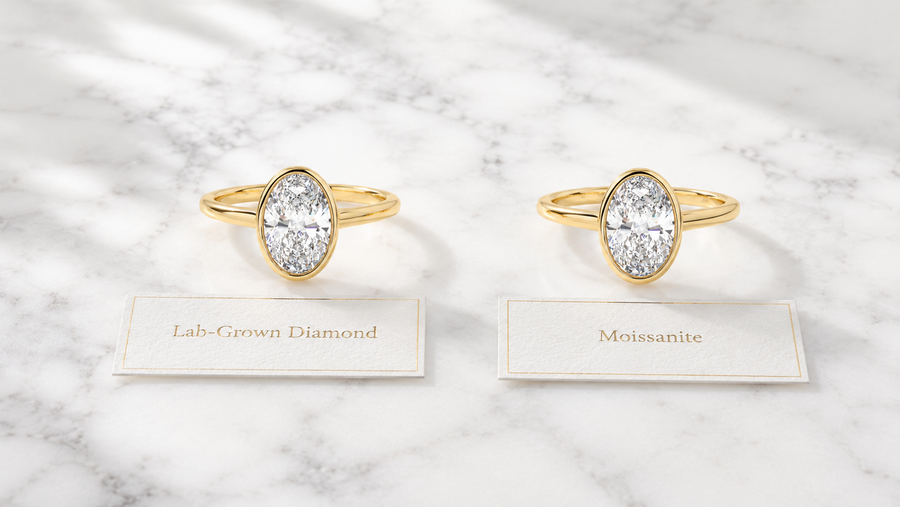
Set a lab-grown and a natural diamond of matching specifications side by side, and no one — not you, not your jeweller by eye — can tell which is which. This isn't a Stella opinion; it's why the certificate has to say which one it is.
What is genuinely different
Three things, and we think you should weigh all three honestly.
1. Origin and formation. Natural diamonds formed over hundreds of millions of years under the earth. Lab-grown diamonds are grown in weeks using technology that recreates those same conditions of heat and pressure. Same result, radically different timeline.
2. Rarity — and therefore price. Natural diamonds carry a scarcity premium: there is a finite supply in the ground, and that rarity is priced in. Lab-grown diamonds can be produced to meet demand, so they cost significantly less for the same size and quality. Within the ₹30,000–₹1,00,000 range where most Indian buyers shop, that means a lab-grown diamond gets you a noticeably larger or better-graded stone for the same spend.
3. Resale. Because they aren't scarce in the same way, lab-grown diamonds generally don't hold resale value the way rare natural diamonds can. We'll never tell you otherwise. A lab-grown diamond is for wearing and loving, not for reselling later at a profit.


Basics
Are Lab-Grown Diamonds Real Diamonds?
Yes — completely and without qualification. A lab-grown diamond is not a simulated diamond, not cubic zirconia, and not moissanite. It is a real diamond with the same carbon atom structure, the same Mohs hardness of 10, and the same optical properties as any mined diamond.
The difference is origin. Natural diamonds form under extreme heat and pressure deep in the earth over hundreds of millions of years. Lab-grown diamonds replicate those exact conditions — either through Chemical Vapour Deposition (CVD) or High Pressure High Temperature (HPHT) technology — and produce a diamond that is physically and chemically identical.
Even advanced gemological equipment cannot distinguish between a lab-grown and natural diamond based on appearance alone. Only specialised laboratory testing can identify the origin. Learn more: Are Lab-Grown Diamonds Real Diamonds?
Natural Diamonds
How Are Natural Diamonds Formed?
Natural diamonds are created between 150 and 200 kilometres below the earth's surface, where carbon is subjected to intense heat (around 1,200°C) and extreme pressure over billions of years. Volcanic eruptions then carry diamond-bearing rock closer to the surface, where they are mined through large-scale operations.
This geological process is what makes natural diamonds rare — and rarity is a significant factor in their pricing. The emotional and cultural significance of a stone that took the earth billions of years to produce also matters deeply to many buyers.
Lab-Grown Process
How Are Lab-Grown Diamonds Made?
Lab-grown diamonds are made using two primary methods:
CVD (Chemical Vapour Deposition): A diamond seed crystal is placed in a chamber with carbon-rich gases. Under carefully controlled conditions, carbon atoms attach to the seed layer by layer, growing into a complete diamond over several weeks.
HPHT (High Pressure High Temperature): Conditions similar to the earth's mantle are created in a laboratory — extreme heat and pressure applied to a carbon source and a diamond seed. The carbon melts and forms around the seed as it cools.
Both methods produce real diamonds. The method itself does not determine quality — the cut, colour, clarity, and carat weight do. Learn more: CVD vs HPHT Diamonds: What Is the Difference?
Price
Price Difference: Why Are Lab-Grown Diamonds More Accessible?
Lab-grown diamonds are significantly more accessible in price than natural diamonds of comparable quality. The reasons are straightforward: lab-grown diamonds do not carry the scarcity premium that comes with geological rarity, and the supply chain is shorter and more predictable.
For Indian buyers, this means you can get a larger, better-graded stone — higher colour, better clarity, bigger carat weight — within the same budget compared to natural diamonds.
At Stella Fine Jewellery, certified lab-grown diamond jewellery starts from ₹25,000 and extends to ₹2,50,000, with most buyers shopping in the ₹30,000–₹1,00,000 range. That price point makes fine diamond jewellery genuinely accessible to a much wider audience. Learn more: Why Are Lab-Grown Diamonds More Accessible Than Natural Diamonds?
Resale
Resale Value: The Honest Answer
Lab-grown diamonds generally have lower resale value than natural diamonds, and it is important to be transparent about this. As lab-grown diamonds have become more widely produced, their market price has adjusted — which is good for buyers at the point of purchase, but does affect what you might recover if you sell later.
Natural diamonds, particularly high-quality certified stones, have generally held their resale value better because of their geological rarity and established market demand.
Our honest recommendation: lab-grown diamonds are jewellery purchases, not investment purchases. They are the right choice if you want to wear something beautiful, give something meaningful, or get better design and specifications within your budget. If your primary goal is a store of value, natural diamonds are the more appropriate choice. Learn more: Do Lab-Grown Diamonds Have Resale Value?
Sustainability
Sustainability and Environmental Impact
Lab-grown diamonds avoid the large-scale land disruption, water use, and ecosystem impact associated with diamond mining. For many buyers, this is a meaningful consideration.
However, lab-grown diamonds do require significant energy to produce — particularly in HPHT processes. The environmental benefit depends largely on whether the energy used comes from renewable or fossil-fuel sources. We do not describe lab-grown diamonds as completely impact-free, because that would not be accurate.
The more honest framing: lab-grown diamonds are generally a more responsible choice from an environmental standpoint, but they are not without footprint. Learn more: Are Lab-Grown Diamonds More Sustainable Than Natural Diamonds?
Certification
Certification: What Should Buyers Check?
Certification is equally important for both lab-grown and natural diamonds. A certified diamond has been independently graded for cut, colour, clarity, and carat weight by a recognised gemological laboratory.
At Stella Fine Jewellery, every diamond comes with an SGL jewellery report. This report includes:
- Diamond origin (lab-grown, clearly stated)
- Diamond weight
- Colour and clarity grade
- Jewellery gross weight
- Gold purity
- A QR code for verification
All gold jewellery also carries a BIS hallmark — the most trusted gold quality indicator in India. Learn how to verify your certificate: How to Check a Lab-Grown Diamond Certificate

Verdict
Final Verdict
Lab-grown and natural diamonds are both beautiful, both real, and both valid choices. The decision comes down to what you value most.
If you want to maximise design, size, and certification quality within a budget — and you are buying jewellery to wear and enjoy rather than as a financial instrument — lab-grown diamonds offer extraordinary value. They are the smarter choice for most jewellery purchases in India today.
If geological rarity, cultural tradition, or resale potential matter more to you than size or design flexibility, natural diamonds remain the right choice.
Browse our collection of certified lab-grown diamond rings, lab-grown diamond earrings, and diamond jewellery under ₹50,000 — all SGL certified, BIS hallmarked, and shipped with full documentation.
Still have questions? Message us on WhatsApp — we are happy to help you find the right piece.
Further Reading From This Series
- Are Lab-Grown Diamonds Real Diamonds?
- What Is the Difference Between Lab-Grown and Natural Diamonds?
- Are Lab-Grown Diamonds Worth Buying in India?
- Do Lab-Grown Diamonds Have Resale Value?
- Are Lab-Grown Diamonds Good for Daily Wear Jewellery?
- CVD vs HPHT Diamonds: What Is the Difference?
- How to Check a Lab-Grown Diamond Certificate
- Lab-Grown Diamonds vs Moissanite: What Should You Buy?
- Are Lab-Grown Diamonds More Sustainable Than Natural Diamonds?
- Why Are Lab-Grown Diamonds More Affordable Than Natural Diamonds?
- The Complete Lab-Grown Diamond Buying Guide for India
Still asked
Are lab-grown diamonds real diamonds?
Yes. Lab-grown diamonds are real diamonds with the same chemical composition (pure carbon), the same hardness (10 on the Mohs scale), and the same visual brilliance as natural diamonds. The only difference is origin — one is formed in the earth, the other in a laboratory.
Can people tell the difference between lab-grown and natural diamonds?
Not with the naked eye — or even with standard gemological tools. Only specialised laboratory testing can identify the origin of a diamond. To the eye, both look identical.
Are lab-grown diamonds more accessible in price than natural diamonds?
Yes, significantly so. Lab-grown diamonds do not carry the scarcity premium of natural diamonds, which means buyers can get a larger, better-graded stone within the same budget.
Do lab-grown diamonds have resale value?
Lab-grown diamonds do have some resale value, but generally less than natural diamonds. We recommend buying lab-grown diamonds for the joy of wearing and gifting — not as an investment or a store of value.
Are lab-grown diamonds good for engagement rings?
Absolutely. Lab-grown diamonds are an excellent choice for engagement rings — they are certified, durable, and allow you to get a more impressive stone in terms of size and grade within your budget.
Are lab-grown diamonds sustainable?
Lab-grown diamonds avoid the large-scale mining and land disruption of natural diamond extraction. However, they do require energy to produce, so they cannot be described as completely impact-free. They are generally the more environmentally responsible choice — but not a zero-footprint product.
What is better: CVD or HPHT diamond?
Both CVD and HPHT produce real, high-quality diamonds. The method alone does not determine the quality of the stone. What matters is the certificate, and the cut, colour, clarity, and carat weight — not the production method.
Should I buy lab-grown or natural diamonds?
It depends on what matters most to you. If you want design flexibility, better specifications within budget, and certified fine jewellery for wearing and gifting — lab-grown diamonds are the right choice. If geological rarity and stronger resale value are priorities, natural diamonds are better suited.
References